Platform overview
What is Vanampadi Community?
A calmer, community driven place for entrepreneurs, businesses and people with likemind to share knowledge, discover useful people, and find opportunities.
Live: app.vanampadi.com
Introduction
Vanampadi is a community platform for discovering useful people, businesses, ideas, and opportunities. It is designed for people who want a more practical place to share knowledge, find services, and take part in local professional communities.
The platform is open to both individuals and businesses. A business profile helps members describe their work clearly; it is not a verification badge or an endorsement by Vanampadi.
Not another social network
Vanampadi is not built to compete with every social platform. It is built for a smaller community that needs room to connect without the noise of an overcrowded feed.
Every business should have an equal opportunity to be seen. Visibility should be based on the value it shares not popularity, follower counts, or engagement metrics.
Designing for calmer, more useful participation
A lot of professional communities end up feeling noisy. Posts with the most followers, reactions, or engagement tend to get noticed, while useful contributions can be easy to miss. We wanted Vanampadi to feel more like a place where people can share what they know, find the right people, and have useful conversations.

That is why the feed is chronological and does not show likes, reaction totals, or popularity-based ranking. It is a small change, but it means a post does not have to perform well with an algorithm before someone gets a chance to see it. The focus stays on what a member has shared and the conversation around it.
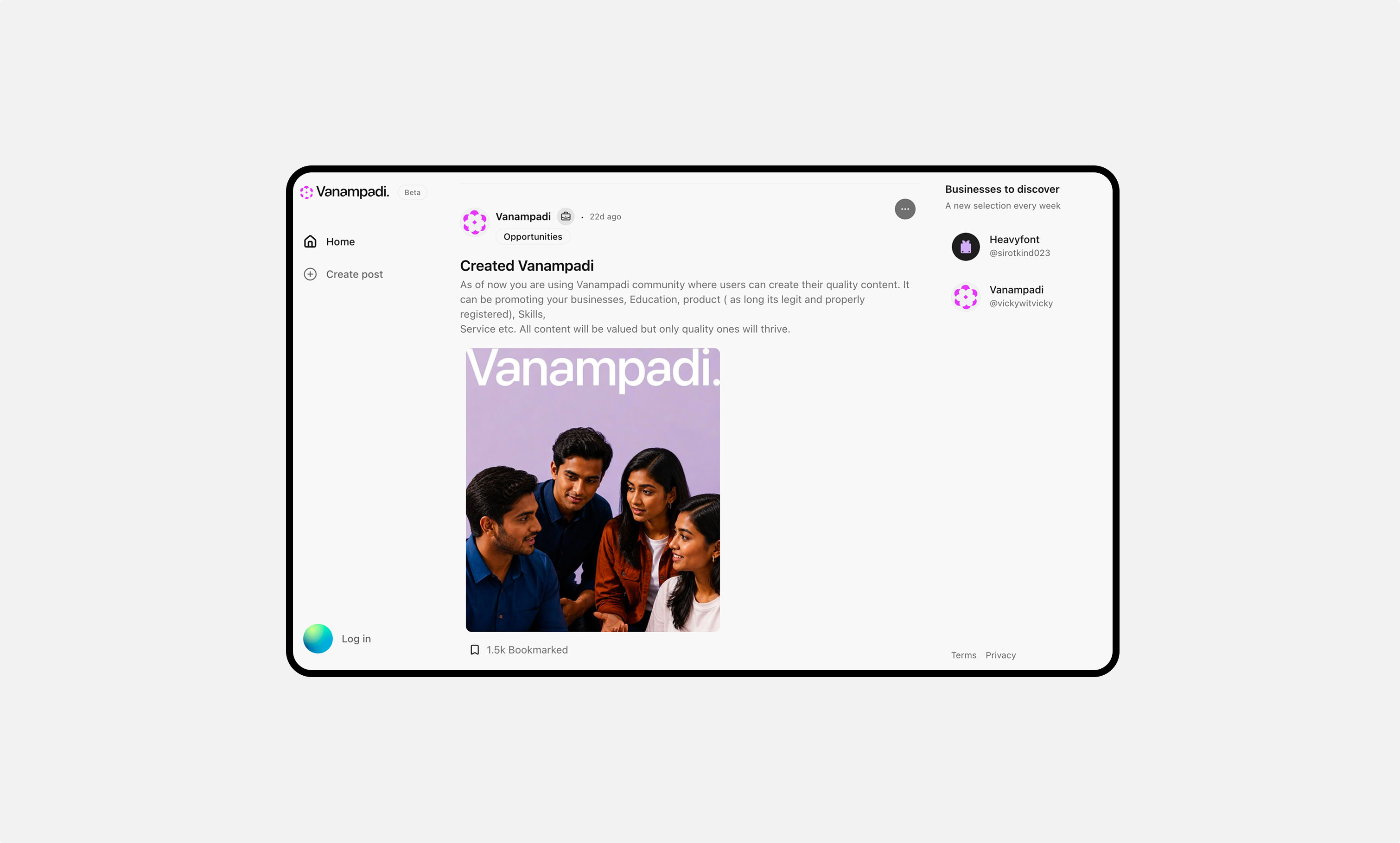
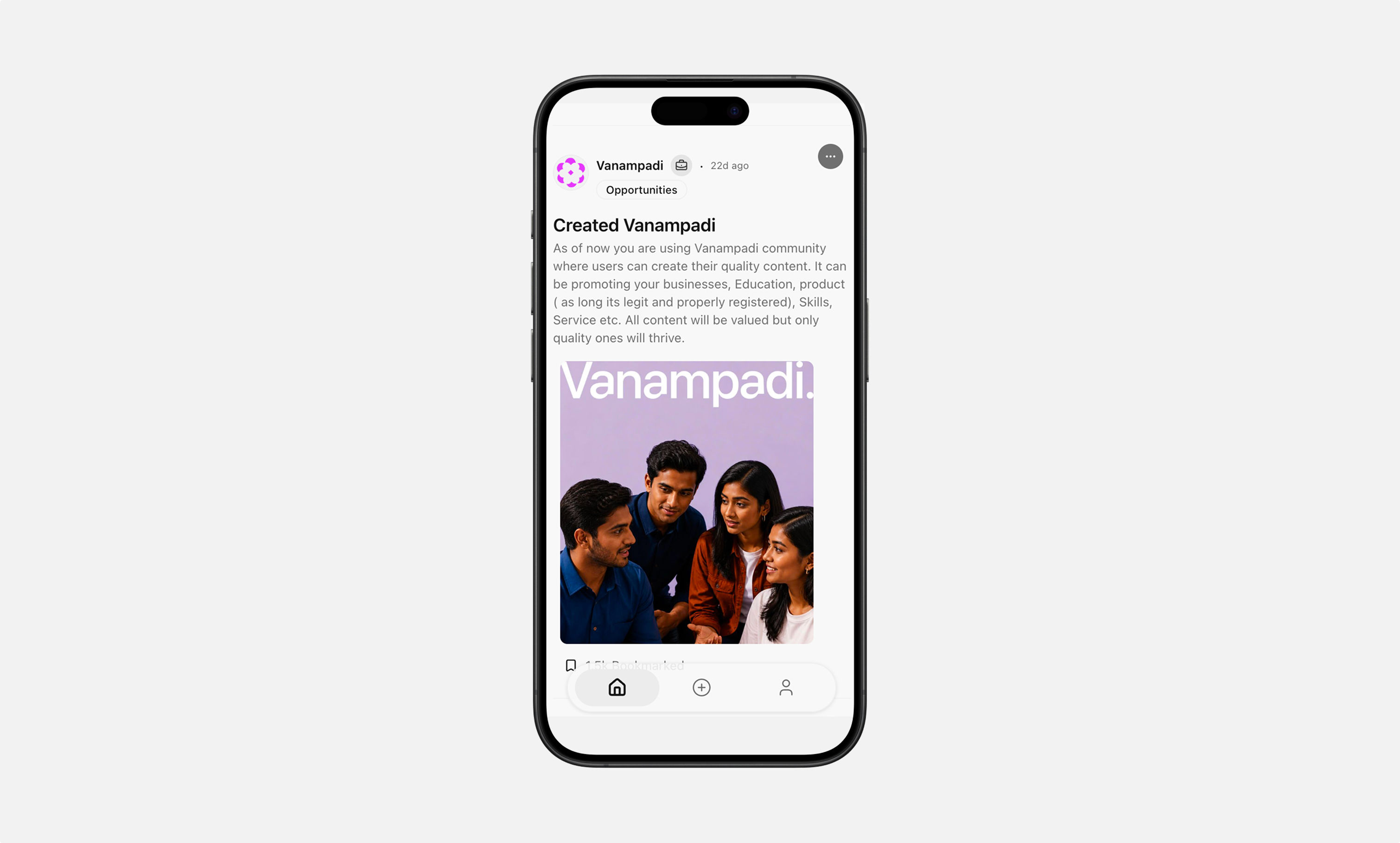
We have also kept the interactions familiar, so people do not need to spend time learning how the platform works. The aim is simple: make it easier to take part, whether someone is sharing their work, looking for a service, or joining a discussion.
There is a trade off. Older discussions can be harder to find as new posts appear. As the community grows, we will need to make discovery better without turning the feed into another attention-driven space.
Technology with a purpose
Vanampadi uses design and technology to make professional discovery and community participation feel straightforward. The goal is not to add more features for their own sake, but to build tools that help people connect and do useful work.
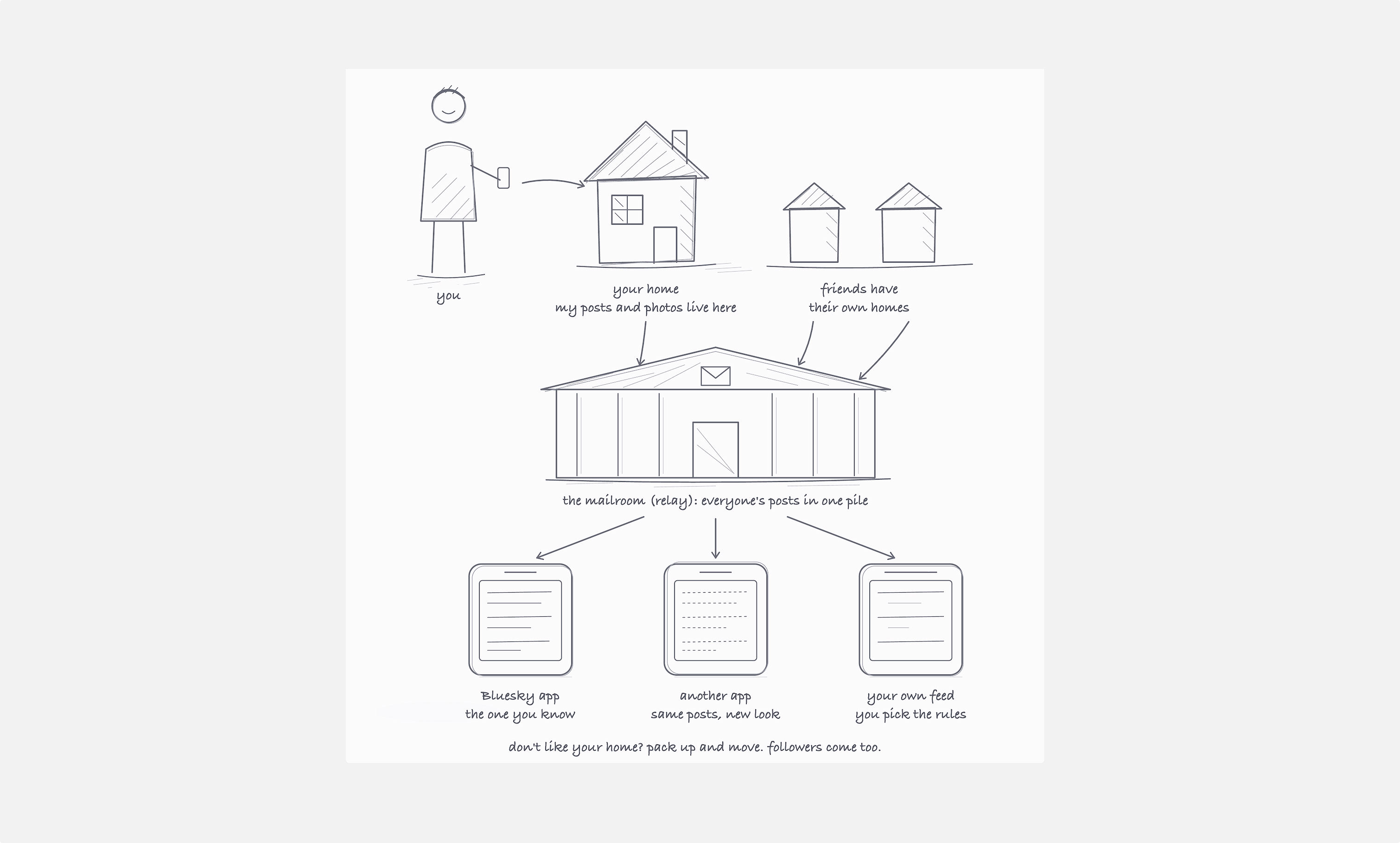
We use AT Protocol by Bluesky atproto.com, which is open-source, decentralized data network. What does it mean? In a non technical way where Centralized social media meaning living in a rented apartment where there is landlord who makes all the rules you own nothing even you own your furnitures.
However, in decentralized mean you own your own house, you own everything and you can move to different park with all your belongings, your furniture etc and your friends still able to find you.
Auth
Vanampadi uses AT Protocol OAuth for Bluesky sign-in through the browser client package.
1npm install @atproto/oauth-client-browserThis is where it the application identifies the member by their decentralized identifier (DID) and creates an authenticated API agent for publishing posts and other permitted operations.
1const { BrowserOAuthClient } =2  await import('@atproto/oauth-client-browser');3
4this.oauthClient = await BrowserOAuthClient.load({5  clientId: this.getClientId(),6  handleResolver: 'https://bsky.social',7});
The Personal Data Server (PDS) stores the user’s AT Protocol profile and content, while Vanampadi uses Supabase to index that content and maintain application specific data. This separation means content stored on the user’s PDS can remain accessible.
From writing a post to publishing it
Publishing connects two parts of Vanampadi’s architecture. First, the authenticated application saves the post to the member’s Personal Data Server. Vanampadi then fetches that record, checks its content, and adds it to the Supabase index used by the community feed.
Auto image compression
Vanampadi processes images in the browser before uploading them to the user’s PDS. Files up to 200 KB are uploaded unchanged. Larger accepted images are converted to JPEG, with quality reduced first and dimensions reduced if necessary. Files above 500 KB are rejected before compression.
1if (selectedFile) {2    const { blob, mimeType } =3        await compressImageUnderLimit(selectedFile);4
5    image = await uploadForumPostImage(6        auth.agent,7        blob,8        mimeType9    );10}',11});
Compressing before upload reduces the amount of image data sent to storage and subsequently downloaded by readers.
1if (file.size <= targetBytes) {2    return { blob: file, mimeType: file.type };3}4
5ctx.drawImage(img, 0, 0, width, height);6const blob: Blob | null = await new Promise((resolve) =>7    canvas.toBlob(resolve, 'image/jpeg', quality)8);9
10if (blob && blob.size <= targetBytes) {11    return { blob, mimeType: 'image/jpeg' };12}13
14if (quality > 0.5) {15    quality -= 0.15;16} else {17    width = Math.round(width * 0.75);18    height = Math.round(height * 0.75);19}
Building Vanampadi has been an exercise in connecting design decisions with engineering choices. A chronological feed, familiar interactions, and an architecture that separates member content from the application all support the same intention, a calmer place to share knowledge and make useful connections.
The platform still in beta and will be subject to change in near future so most of the design part will be upgraded.